Search This Blog

Small Windows That Make a Big Statement

By Gates Dearein
Courtesy of  homeritejacksonville.com/

Sidelights, dormers, bays, and bows. You may have heard of some of these types of windows  – but what are the others? One or more of these special windows may be just the touch you’ve been looking for to add style and distinction to your home. And they aren’t just attractive.  Each has its practical purpose too, from adding light to creating space. One word of caution, though: Even if you consider yourself a skilled handyman or handywoman, these windows are trickier to measure for and install than ordinary windows, so you may want to leave this job to the professionals. Below we’ll explain what each type is, and where in your house you might want to use it.

Sidelights
A nice door Kew Gardens

You’ve probably seen these and may not have known what they were called. Sidelights are narrow vertical windows on one side, or sometimes both sides, of entry doors. They add light to foyers and other entry areas, creating a nice, welcoming space. Depending on your design taste and budget, there are many options. You can go with clear glass, in which case you would probably want to put up a window treatment, easily found for this type of window at most stores that sell window treatments, obscure glass which gives a bit more privacy, or something a bit fancier such as etched or stained glass. These types of windows are a simple way to add a flair to your home.

Dormers
English: House in Cumberland, Maryland USA wit...
The term “dormer” is often used interchangeably with “dormer window”. A dormer is a part of a building that juts forward from the surface; a dormer window is a window fitted into that space. Dormer windows are similar to skylights in that they add light to higher areas of a home, but most dormer windows open, allowing for ventilation and making what may have been an unbearably hot and stuffy part of the house easier to tolerate. If you have attic space that you’re converting into living space, such as a loft, dormer windows may be just what you’re looking for in terms of style and practicality. Some dormer windows, those called “blind dormers”, look like windows from the outside but are not visible from inside the house. These windows are strictly an exterior style element.

Bay Windows
English: Line art drawing of a bay window. Fra...
Bay windows comprise a category made up of many kinds of windows. Technically, any window construction that protrudes from a house is a bay window, regardless of shape, angle, height, or width. The kind of bay windows most of us are familiar with are bow windows and oriel windows. The main difference between the two is that oriel windows tend to be more ornamental and are rarely used in new residential construction. These are the windows you see typically on old buildings in downtown areas. One of the reasons they first gained popularity in cities was that they offer a more expansive view of street and foot traffic. Both types curve outward from the main part of the house and are usually on upper levels, although sometimes bay windows are on the first floor. Bay windows add a great deal of architectural interest to a home, on the inside as well as the outside. Depending on how large the angle of the window curve is, the interior nook created by a bay window can be used for anything from a window seat to a parlor.

Custom Windows
In addition to the less-commonly used types of windows we’ve discussed above, you might have something in mind for a special spot in your house, and you just haven’t been able to find the right thing. Keep in mind that you can have custom windows made in almost any size and shape, to perfectly complement your home’s décor or add just the right finishing touch to your remodeling project. It’s amazing how much a room can change by letting in a little more light.

In this article, we’ve described some windows that are different from the usual rectangles. We’ve explained where and why you might want to use each kind, and also mentioned having custom windows made if you’re looking for something completely unique.

Gates Dearen is the co-owner of HomeRite Windows and Doors in Jacksonville, Florida. Owners Dearen and Richard Walden have been serving the building products industry in Florida for over 25 years. They know the products, the industry, the market and what adds great value to a home. Their approach is a somewhat different than others. They strive to match the homeowner with the right windows and doors for their home and budget. They know that home improvements projects can be a hassle. They strive to make the process as pleasant as possible with first-rate, energy efficient products; affordable prices; and expert, award-winning installers that employ the best practices and who respect your home as if it were their own. 


Related articles

The Top 5 Questions to Ask When Replacing Your Windows and Doors

By Gates Dearen
Photo Credit: nelsonwindow.com

You’ve noticed that your doors and windows are letting in the elements, or are bringing down the overall appearance of your house. You’ve decided to replace them, so all you need to do is measure each window and door and then head out to the nearest hardware superstore, right? 

Wrong! It’s important to assess your home’s individual needs and to understand the best solutions for energy efficiency, as well as home security. We have compiled a list of the most important questions to ask as you choose your replacement windows and doors.

What is my budget?
While it may be tempting if you are on a tight budget to “go cheap” when replacing your windows and doors, a better plan may be to choose the best windows and doors you can afford now for part of your house, and wait until you can do the same for the rest of the house later. High-quality windows and doors are an important investment in your home’s appearance, security, and energy efficiency. As with most purchases, spending a little more on the front end can reap greater benefits down the road. A windows and doors professional can help you to determine which should be replaced first and which can wait.

What features are important to me?
The features you choose are largely a matter of personal taste (unless you have children, in which case safety is also important). Work with a professional to decide which features will increase your comfort and your windows’ and doors’ function and durability. Single-hung windows open from the bottom only. Double-hung windows can open from the top or the bottom. Again, it’s all about preference. If you want to transform a simple opening into a stunning room accent, you can choose from a variety of custom shapes for your windows. 

casement distinction window

When it comes to entry doors, there are also many options. Maybe you want a standard solid door with small windows at the top. Or maybe you prefer something a bit more reflective of your personal style, such as a door with a stained glass insert or a decorative lockset. Look at your options and find the door that says “home” to you. Many people prefer to spend a great portion of their budget on an entry door over other doors and windows in their homes because it’s the first thing they (and their guests) see upon arriving at their home. Again, it just depends on what you like.

Patio doors offer fewer options aesthetically speaking, but do differ in terms of safety features such as shatter-proof glass and functionality. Do your homework. Here in Florida it’s especially important that your patio door is made of impact-resistant glass. Low-e coatings and energy-star ratings are also important, but we’ll get to those later. Beyond these features, the options include clear glass or obscure glass, which provides additional privacy.

Do the windows and door glass have a Low-e coating?

Visible LightLow-e, or Low-emissivity, refers to glass panels’ ability to reflect light. Low-emissivity windows and doors cause heat to be reflected off, rather than allowing it to collect and “seep through” (be emitted) into the home. The Low-e coating keeps the heat from being absorbed and emitted, instead reflecting it away from the glass. This technology is related to the insulation used in spacecraft to keep heat from accumulating on both reflective surfaces, inside and outside, but actually the application of the technology is more complicated in windows and doors because glass has such a high level of emissivity, thus posing the challenge of maintaining Low-e while letting in light. Manufacturers of high-quality windows and doors apply coatings to reflect radiant energy, which helps to keep heat on the same side of the glass it’s coming from – outside in summer, inside in winter – while allowing light to pass through. This improves thermal efficiency (insulating properties) because radiant heat stays where it belongs, outside or inside depending on the season and the weather.

What energy-efficiency ratings do these windows and doors have?
There are several standards set by the industry that let you know your windows and doors will work hard to save energy (and money in cooling/heating costs). The one you’re probably most familiar with is the Energy Star rating. In order to carry the familiar symbol (shown below), windows and doors must be, at a minimum, 15% more energy efficient than those without the designation. Most doors and windows have a sticker that shows their actual energy efficiency. If not, ask. Any reputable window and door professional will readily share this information with you.
Look for this logo when considering your new r...

Another performance standard is the National Fenestration Rating Council (NFRC) Certification. This is a non-profit group that, as stated in their website, “empowers consumers who are in the market for energy efficient windows, doors, and skylights. When you see the NFRC label on these products, this is your assurance that it’s going to perform the way it’s advertised to perform.” (www.nfrc.org)

How can new windows and doors make my home more secure?
Unless you have recently updated your windows and doors you’ll find that security options have improved. When thinking about security, think beyond the doors and windows themselves. Look for fire-rated doorframes and window frames, high-performance hinges, secure and weather-resistant thresholds and astragals, and of course high-quality locksets. Look for ease of use in window locks. Most new high-quality windows have simple slide or flip locks. The same is true for patio doors; while the older types may not have been easy to secure, the new ones are.

As for the doors and windows themselves, look for impact ratings, as well as long-term warranties. It’s a good idea here in Florida to choose doors and windows that will stand up against severe weather. Security isn’t just about keeping out human intruders. There are plenty of items in your yard that you wouldn’t want in your house if the wind picked them up and tossed them!

In this article, I discussed the top five questions to ask when replacing your windows and doors, and why those are important questions to ask. I explained what to look for as you plan out your new window and door purchase.

Gates Dearen is the co-owner of HomeRite Windows and Doors in Jacksonville, Florida. Owners Gates Dearen and Richard Walden have been serving the building products industry in Florida for over 25 years. We know the products, the industry, the market and what adds great value to a home.  Our approach is a little different.  We strive to match the homeowner with the right windows for their home and budget. Home improvements can be a hassle.  We’re here to make life easier with first-rate, energy efficient products; affordable prices; strong warranties and expert, award-winning installers that provide excellent service while respecting your home as if it were their own. 

Add Beauty and Security to Your Home with a New Entry Door

By Gates Dearen
Courtesy of
homeritejacksonville.com/

Could your home use a facelift?

One of the easiest ways to update your home, and add curb appeal, is to change your front door. According to the website www.energy.gov: “New exterior doors often fit and insulate better than older types. If you have older doors in your home, replacing them might be a good investment, resulting in lower heating and cooling costs. If you're building a new home, you should consider buying the most energy-efficient doors possible.”

Maybe you’ve always wanted to have a beautiful glass-paneled door but were afraid that wasn’t an option in Florida, with our hot and sometimes severe weather. You may be surprised to find that whether you prefer a solid or glass-paneled door, there are many choices available that will make your home more secure as well as more visually appealing.

Can Storm Windows and Doors Protect Your Home from Natural Disasters?

From his vantage point high above the earth in...
Photo Credit: nasa.gov
By Gates Dearen

Our recent brush with hurricanes Arthur and Bertha may have made you wonder whether your house was ready for hurricane season. If your windows or doors rattled, or if you heard wind whooshing through – or worse, saw rain coming in – it may be time for some updates. Rain and wind are obvious troublemakers, but have you thought about the UFOs (unexpected flying objects) that might come barreling through your yard – and straight for your windows and doors – in the midst of the storm? Such objects cause millions of dollars in damage every year (and take many lives), either because they weren’t secured prior to the storm or because homeowners had old windows and doors that were not impact-resistant. Hurricane season lasts until November 30, and late summer/early fall storms are historically stronger and cause more damage than early summer storms. If you haven’t already safeguarded your home against hurricane damage, now is the perfect time.
Impact Single Hung Windows

Safe Windows
If you think that taping your windows will keep your windows from breaking, think again. According to the U.S. Government disaster preparedness site www.ready.gov, those in areas at risk for hurricane damage should cover windows, an unsightly option, or install windows made of impact-resistant glass. The latter is a better choice because these windows are more attractive and do not have to be taken down in the winter and put up again in the summer, as do outdoor window covers.

If you do choose to replace your windows and/or sliding doors, look for the AAMA (American Architectural Manufacturers Association) label and the National Fenestration Rating Council certification. These organizations have high standards for quality and their seals of approval carry a lot of weight. Next, do your research on both the company and the product. Has the company been around for a while? If so, that’s a good indicator that they’ll still be around if you need them in the future. Do they have customer testimonials? If they’ve done a good job for other customers, they’ll likely do a good job for you too. How is the impact-resistance of the windows created? Ask if there is a layer of poly material between the panes of glass. These types of windows and sliding doors not only keep out wind and rain, but also protect your home, and its occupants, from wind-blown debris.  Impact-resistant windows and sliding doors have the additional benefit of being more energy efficient than their non-impact-resistant alternatives.

Safe Doors
When it comes to hurricane safety, you may have thought more about your windows and sliding doors than about your entry doors, but in some cases entry doors have nearly as much glass as sliding doors or windows. In such cases, it’s equally important to choose impact-resistant glass. You may be surprised to find how many options are available to you in impact-resistant, weather-resistant attractive door glass. Whether you prefer etched glass, a stained-glass look, or blinds-between-panes, you can find whatever suits your taste, made with glass that will protect your home and keep your family safe. Additionally, most glass panels for entry doors that have been crafted to resist impact also have a Low-e coating which allows sunlight in while keeping heat out, helping to conserve energy and prevent fading of carpets and furniture.

English: upvc patio doors 
For all doors, glass or not, a good fit is crucial. No matter how good the materials, if your door does not fit properly, it will not keep out the weather. Make sure the weather stripping is in good condition and that it seals tightly when the door is shut. Check that the threshold meets the bottom of the door with no gaps. This is also a good time to see that your garage door closes tightly and doesn’t rattle or buckle in the wind; consider reinforcing your garage door to prevent flooding or structural damage.


UFOs - Unexpected Flying Objects
Storms can come up quickly in Florida, and we don’t always have notice. If you’ve lived here for any length of time, chances are good that at least once you’ve looked out your window and seen something flying across your yard. With hurricanes and tropical storms, though, we usually have at least a little warning. One of the best ways to keep your windows and doors – and your entire home – safe is to secure loose objects in your yard, or bring inside whatever you can. Items such as outdoor furniture, yard tools, and grills can become dangerous missiles when propelled by high winds. This is a situation where a small amount of effort up front can save a lot of trouble down the road.

Window and doors really can protect your home – and your family – from a natural disaster. With a little planning and “refortification” on your part, your doors and windows can work with you to keep the weather where it belongs: outside.

In this article we’ve explained how your windows and doors can help to protect your home in a hurricane. We’ve also given some tips for securing items outside your home to prevent them from damaging your home’s exterior, windows, and doors.

Gates Dearen is the co-owner of HomeRite Windows and Doors in Jacksonville, Florida. Owners Dearen and Richard Walden have been serving the building products industry in Florida for over 25 years. They know the products, the industry, the market and what adds great value to a home. Their approach is a somewhat different than others. They strive to match the homeowner with the right windows and doors for their home and budget. They know that home improvements projects can be a hassle. They strive to make the process pleasant with first-rate, energy efficient products; affordable prices; and expert, award-wining installers that employ the best practices and who respect your home as if it were their own. 

Related articles

How Do You Check for a Leaky House?

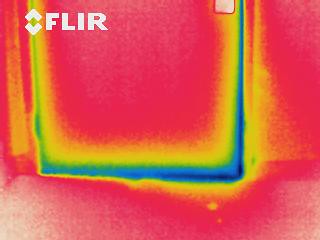
Cold Air Leak Under Door
Cold Air Leak Under Door (Photo credit: CBC || Thermal)
By Gates Dearen

Leaky faucets or roofs are easy to spot; it’s hard not to miss the water accumulating around the leaks. But how do you know if your house is leaking, letting hot air in and cold air out? You may not have thought much about this problem, but if air is leaking into or out of your house, it is literally money out the window! Windows  and doors  are probably the biggest culprits, as old and ill-fitting windows can lead to drafts throughout your house. While it’s best to have a window-and-door professional come out and take a look, there are simple ways you can check for yourself. Here are some places to look for air leaks.

Seals
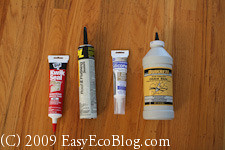
Are the seals around your windows and doors in good repair? Make sure they are tight and intact. Seals can dry out and crack, making them ineffective, especially in the Florida heat and sun. A quick inspection will let you know if it’s time to replace them. Similarly, if you have caulk around your windows, or window air 
Caulk-Window-Sealers-Fillers
Caulk -Sealers-Fillers 
conditioning units, make sure it forms a good bond with no cracks or gaps. Also check the frames. If light comes through your window or door frames, air is getting through, too.

Windows
Try to gently rattle your windows. Movement can indicate leakage. If your windows are old, or of poor quality, they are not keeping the inside air in and the outside air out. The only real remedy for this problem is replacing the windows with newer, more energy-efficient ones. It may seem like a big investment up front, but you will begin to see savings in your cooling and heating bills immediately, and you’ll be much more comfortable.

Doors
What are your doors made of? If you don’t know, find out. A good quality door is usually made of steel or fiberglass, although there are some other materials that will work well to act as a weather barrier, important for keeping wind and rain, as well as heat, outdoors. Try the “rattle test” as suggested above in the window section. If it moves, the door probably leaks. Make sure the threshold is secure and properly placed so as not to let any air get in or out at the bottom of the door. If you do have a gap, try placing a draft-stopper along the bottom of the door until you are able to fix it. Also check your doorknob and lockset to be sure it is fitted properly to the door.
English: upvc patio doors

Patio doors can present a special problem, mainly because they are usually larger than your other doors and windows. Is the glass on your patio door energy efficient? Does it have a low-e coating and an Energy Star rating? Does it close securely with no gaps? If not, it may be time to replace it. If you do choose to purchase a new door, look for one with pile weather-stripping on the panels, which increases efficiency and reduces air infiltration.

Unexpected places
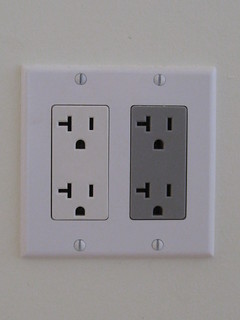
Electrical Outlet
The above-mentioned sources of air leaks are the most prevalent, but have you thought about how much air could be getting in or out around your switch plates and outlets? Chimneys? Outdoor faucets? These less-obvious sources can be big air-suckers! You may want to call in a professional to check your entire house, including roof and foundation/house juncture, for leaks, but in the meantime, you can do a relatively simple check.


BUILDING PRESSURIZATION TEST*
If you are having difficulty locating leaks, you may want to conduct a basic building pressurization test to increase infiltration through cracks and leaks, making them easier to detect:
1)      Turn off all combustion appliances such as gas burning furnaces and water heaters on a cool, very windy day.
2)      Shut all windows, exterior doors, and fireplace flues.
3)      Turn on all exhaust fans that blow air outside, such as your clothes dryer, bathroom fans, or stove vents, or use a large window fan to suck the air out of the rooms.
4)      Light an incense stick and pass it around the edges of common leak sites. Wherever the smoke wavers or is sucked out of or blown into the room, there's a draft. You can also use a damp hand to locate leaks; any drafts will feel cool to your hand.

Look for this logo when considering your new r...If you don't want to turn off your furnace, you can just turn on all your exhaust fans to depressurize your home.
Other air-leak detection methods include the following:
·         Shining a flashlight at night over all potential gaps while a partner observes the house from   outside. Large cracks will show up as rays of light. Not a good way to detect small cracks.
·         Shut a door or window on a dollar bill. If you can pull the dollar bill out without it dragging, you're losing energy.  (*http://energy.gov/energysaver/articles/detecting-air-leaks)
As I said at the beginning of this article, if your house is leaking, it’s costing you money. Well-fitting, well-constructed windows and doors and frames will make the biggest difference in stopping air leakage, but taking care of smaller leaks in less-obvious places can add up to additional energy savings and greater comfort.

In this article, I pointedout some ways your home may be letting air in and out. We looked at the role windows and doors have in preventing air leakage, along with discussing some other places you can look and methods you can use to check for leakage.

Gates Dearen is the co-owner of HomeRite Windows and Doors in Jacksonville, Florida. Owners Gates Dearen and Richard Walden have been serving the building products industry in Florida for over 25 years. We know the products, the industry, the market and what adds great value to a home.  Our approach is a little different.  We strive to match the homeowner with the right windows for their home and budget. Home improvements can be a hassle.  We’re here to make life easier with first-rate, energy efficient products; affordable prices; strong warranties and expert, award-winning installers that provide excellent service while respecting your home as if it were their own. 

Related articles

Understanding the “E” in Low-E Windows and Doors

Thermogram of a Passivhaus building, with trad...
Thermogram of a Passivhaus building, with traditional building in background. (Photo credit: Wikipedia)
By Gates Dearen

You’re ready to replace your windows – you’ve determined your needs and your budget – but when you start shopping, you find yourself confused by terms like “Low-e”. You’re not alone! While you may understand that it’s important to look for windows with a Low-e factor, you may be wondering what that means and why it’s important. No explanation of Low-e (short for Low-emissivity) would be complete without the definition of a few other key terms, such as “thermal radiation”, “reflectivity”, and “opacity”.

Emissivity
The “E” is short for emissivity, specifically thermal emissivity.  Low-emissivity windows and doors cause heat to be reflected off, rather than allowing it to collect and “seep through” (be emitted) into the home. Perhaps an easier way to think of it is to consider a surface that has a high emissivity factor: asphalt. If you’ve ever stepped into a parking lot in Florida in August, you’ve felt the effects of high emissivity. The asphalt absorbs and emits heat at a ratio .90 to .10. In other words, 90% of the heat directed at the asphalt is absorbed and emitted, and only 10% is reflected. You certainly wouldn’t want the glass in your home’s windows and doors to have that level of emissivity! But plain, uncoated glass has an even higher level of emissivity than asphalt: .93. This is why Low-e is such an important factor in choosing your new windows and doors. But how does it work? 


Thermal Radiation
Everything with a temperature greater than absolute zero (−273.15° Celsius, −459.67° Fahrenheit) emits thermal radiation. When the body emitting thermal radiation, the sun, for example, has a higher temperature than whatever is in its path, the resulting heat is absorbed – unless, as in the case of a Low-e coating, something reflective is put in place. The Low-e coating keeps the heat from being absorbed and emitted, instead reflecting it away from the glass. This technology is related to the insulation used in spacecraft to keep heat from accumulating on both reflective surfaces, inside and outside, but actually the application of the technology is more complicated in windows and doors because glass has such a high level of emissivity, thus posing the challenge of maintaining low-e while letting in light. 


Reflectivity
Through our discussion up to this point, you’ve probably gathered that reflectivity refers to the property of objects to “bounce” heat off, as opposed to absorbing and emitting it, and is inversely related to emissivity. Metals, including aluminum, as in aluminum foil, are among the most reflective substances, but most of us wouldn’t want to coat our windows and door with foil. Instead, manufacturers of high-quality windows and doors apply coatings to reflect radiant energy, which helps to keep heat on the same side of the glass it’s coming from – outside in summer, inside in winter – while allowing light to pass through. This improves thermal efficiency (insulating properties) because radiant heat stays where it belongs, outside or inside depending on the season and the weather.

Opacity
Unless you want to keep out all light – for example, through light-blocking blinds or shades that are always closed – there isn’t really a way to entirely prevent at least a small fraction of thermal radiation (heat) from coming in, or going out. Opacity refers to the “see-throughness” of objects: for our purposes, glass in windows and doors. The more opaque an object, the less its ability to let light through. It’s fairly obvious that having no windows and doors could potentially allow you to nearly completely insulate your home. Even a fully-sealed house will have some energy loss, if the occupants ever leave, allowing for air transfer from in to out and vice-versa. However, who wants to live like that, never seeing the sun shining, kids playing in the yard, birds flying from branch to branch? For those of us who like to come and go, who like to watch the world when we can’t always be out in it, or choose not to because of less-than-ideal climate conditions, coated glass gives us the best of all worlds. And the low-e coating is the best technology we have to achieve that goal.

Putting it All Together
So what, in practical terms, does this mean to you as you choose new windows and doors? It means you should look for windows and doors with a Low-e coating or glaze, which can increase your home’s thermal efficiency by as much as 100%. Glazed or coated glass is even more efficient when it is combined with the additional technology of multi-paned glass with argon between the panes. The combination of technologies maximizes the insulating properties of your windows and doors. Not only will you conserve energy – and, consequently saving money – but you will also enjoy a more comfortable home.


In this article, we explain what "Low-e" means and define the terms “thermal radiation”, “reflectivity”, and “opacity”, particularly as they relate to glass in windows and doors. Finally, we have tied it all together to show how this information can help you understand what to look for when choosing new windows and
doors. If you found this article helpful, please pass it on.

THE AUTHOR:  Gates Dearen is the co-owner of HomeRite Windows and Doors in Jacksonville, Florida. Owners Dearen and Richard Walden have been serving the building products industry in Florida for over 25 years. They know the products, the industry, the market and what adds great value to a home. Their approach is a somewhat different than others. They strive to match the homeowner with the right windows and doors for their home and budget. They know that home improvements projects can be a hassle. They strive to make the process pleasant with first-rate, energy efficient products; affordable prices; and expert, award-wining installers that employ the best practices and who respect your home as if it were their own. 

Related articles
Enhanced by Zemanta